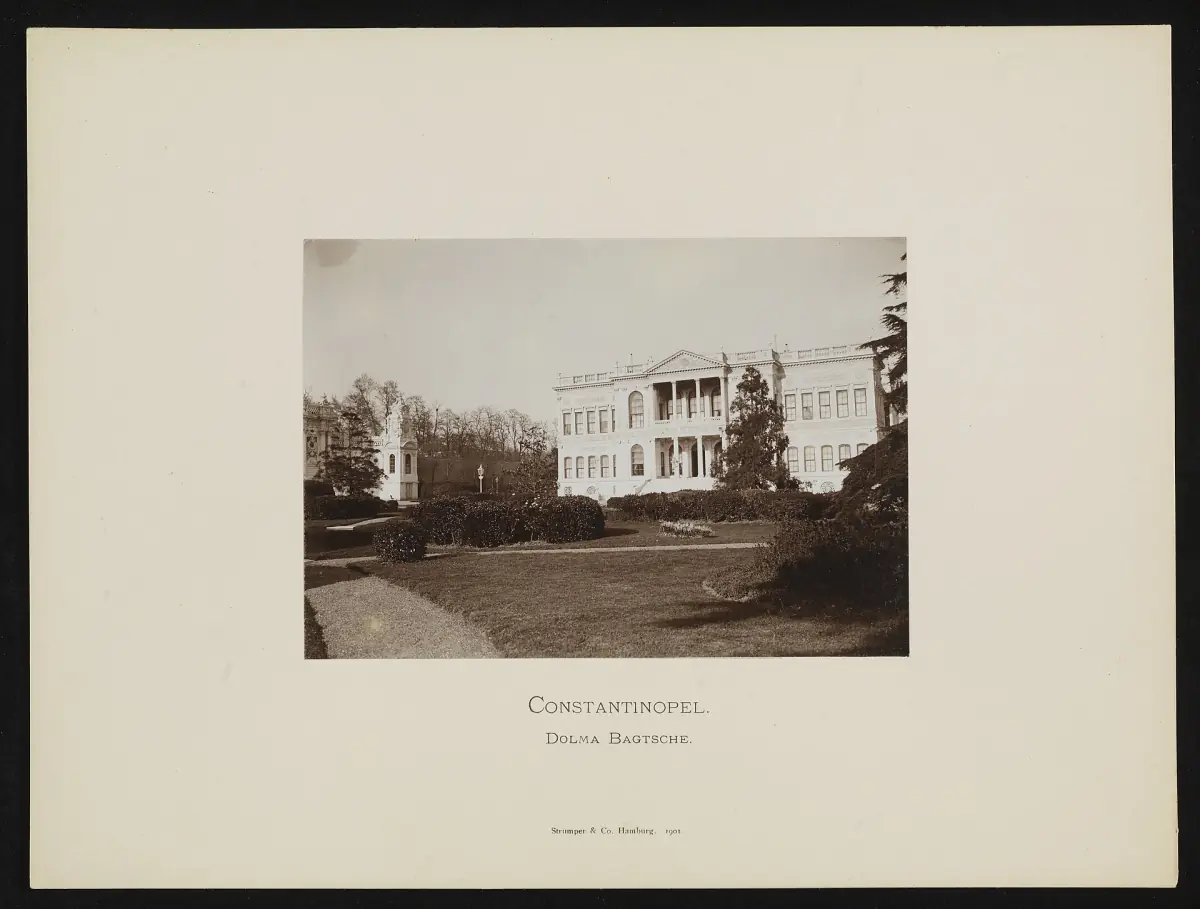
Dolmabahçe Palace history: construction and a new residence
Dolmabahçe Palace history begins with the residence commissioned by Sultan Abdülmecid. Building started in 1843, and the palace opened in 1856. This chronology places it in the nineteenth century and gives the setting for understanding the move of the main residence and government functions to the Bosphorus. Start with those dates before looking at individual rooms: they locate the palace within the later Ottoman period and distinguish it from an older imperial residence.
The palace was used by several sultans and the last caliph. Its waterfront position in Beşiktaş is part of the experience today, but the historical visit also depends on what happened inside. Combine this account with the architecture guide to connect dates and people with the Selamlık, Harem and Ceremonial Hall. The room plan gives structure to the story rather than reducing the palace to an exterior landmark on a cruise route.

Administration, ceremony and family life
The Selamlık, also known as Mabeyn, was the administrative area. The Harem served the family, while the Ceremonial Hall stood between them. These functions are a useful way of reading the palace as a historical residence. They show why a guided account might move between government, ceremony and domestic life, even within the same building. An indoor visit gives a different frame from a boat trip focused on the waterfront façade.
When planning your visit, decide whether you want a chronological introduction from a guide or an audio format centred on the palace rooms. The palace tours page compares those services. A general historical programme can help place Dolmabahçe in a wider Istanbul day, while a dedicated admission option keeps attention on the building. Choose the service for the kind of explanation you want, then consider admission coverage separately.
Our picks: guided programmes
Our take: The cable car programme includes a ticket for the ride but requires separate palace and boat tickets. The other programmes include a guide; check whether palace entry is included before booking.
Hand-picked tours, booked through GetYourGuide and Viator. Prices are indicative starting prices in euros (as of October 2026). Tap a tour for live availability and the current price in your currency.

Palace programme with local guide
- Professional Local Guide
- Cookies and baklava
- Turkish tea and lemonade
Meet the guide at the clock tower. Check whether palace entry is included before booking.
Check availability →
Palace programme with pickup
- Pick up & Drop off
- Professional Licenced English Guide
A licensed English-speaking guide accompanies the programme. Check whether palace entry is included before booking.
Check availability →
Guided palace programme and cable car
- English-speaking guide
- Cable Car ticket
Palace entry and the boat ticket cost extra. Hotel transfer is included only with the selected option.
Check availability →Guided programmes with historical context
Compare guide services, meeting arrangements and wider city programmes while keeping palace admission separate where required.
The republic and the museum palace
The palace’s story continues beyond its Ottoman residential use. The state educational account records a presidential function from 1927 to 1949 and describes it as a museum palace since 1984. These different periods matter when interpreting the rooms. Dolmabahçe is both an imperial residence and a place associated with the republic; keeping those uses in order gives a clearer account than treating every feature as belonging to one moment.
A visit can therefore follow several historical questions without adding another destination. How did state functions shape the Selamlık? How does the family area differ? How did the later presidential use change the meaning of the palace as a whole? These are prompts for looking and listening during a visit, rather than promises of particular exhibits. Leave room for the rooms themselves and for the explanations included in your chosen format.
Atatürk’s room 71 and 09:05
Atatürk died in room 71 in the Harem on 10 November 1938 at 09:05. A parliamentary commemoration report published on 10 November 2009 records those historical details. A separate parliamentary account from 2 November 2006 described the room as preserved in its then existing condition. Read that description in its historical setting; for the route and displays during your own visit, follow the palace’s current arrangements.
The subject calls for a respectful visit rather than a checklist of photographs or a special themed sales promise. The general programmes offered on this page concern the palace and wider city history. For 10 November itself, the visitor rules provide a special free memorial route, including when the date falls on a Monday. Our opening hours guide explains why that route differs from a normal full palace visit.
History during a guided programme
The city programme beginning outside Dolmabahçe includes an English speaking guide and a cable car ticket. Palace admission, the boat ticket and lunch are extra; hotel transfer belongs only to the option that includes it. This format suits a day built around guidance across several parts of an itinerary. Keep the separate tickets in your planning instead of treating a broad programme title as a complete admission bundle.
The guide programme meeting near the clock tower includes a local guide and refreshments such as cookies, baklava, Turkish tea, lemonade, fruit and water. The programme meeting outside the palace with a red flag includes an English speaking guide and pickup and drop-off. For these guided formats, choose palace admission separately according to your selected arrangements. The admission guide explains the palace ticket and included sections; the guide service and ticket coverage should remain separate decisions.
Topkapı and the residence change
For the earlier main residence and government seat, compare Topkapı Palace. It is a different palace in Sultanahmet, Fatih, whose principal residential and governmental role continued until the middle of the nineteenth century, before Dolmabahçe took over that function. This is a useful historical comparison, rather than an extra section of the same admission. Give each palace its own place in the itinerary and its own ticket arrangements.


Questions about your visit
When was Dolmabahçe built?
Construction began in 1843 under Sultan Abdülmecid and the palace opened in 1856.
What is the historical significance of room 71?
Atatürk died there on 10 November 1938 at 09:05. The room is in the Harem.
Do the guided city programmes include every ticket?
The guide and cable car programme charges palace admission, boat tickets and lunch separately. Compare each programme’s included services with your intended visit.